


At Visual Paradigm, we are constantly striving to unify your development, design, and documentation workflows. Recently, we introduced Visual Paradigm VPasCode, our powerful text-to-diagram platform that allows creators to build rich visuals using popular formats like PlantUML, Mermaid.js, and Graphviz. Today, we are thrilled to announce a major enhancement that bridges the gap between creating visuals and writing documentation: The VPasCode to OpenDocs Pipeline Integration.
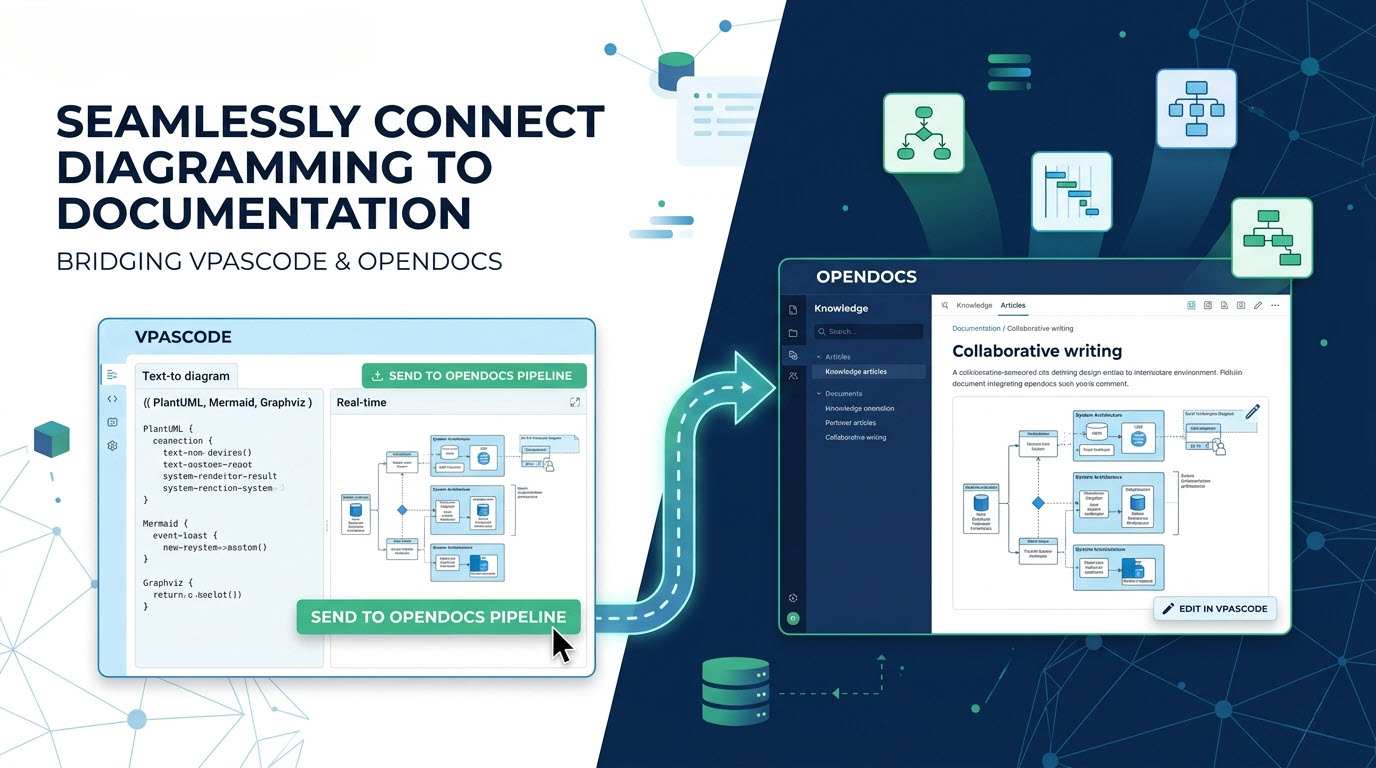
With this new capability, you can effortlessly “send” your diagrams from the VPasCode environment directly into OpenDocs—our next-generation, AI-powered knowledge management platform. No more manual exporting, downloading, or re-uploading images. Your visual assets now flow seamlessly into your documentation suite with a few simple clicks.
Why This Matters: Real-World Use Cases
To help you visualize how this integration optimizes your day-to-day operations, here are a few common scenarios where the VPasCode-to-OpenDocs pipeline shines:
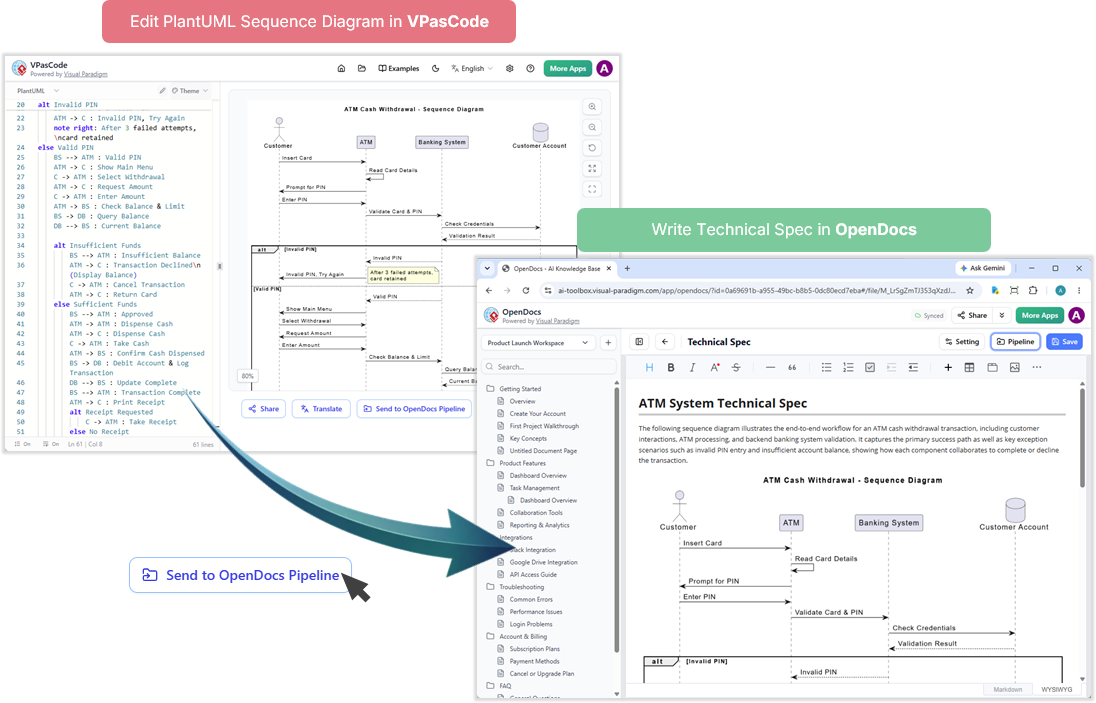
- Software Architecture & Technical Specs: A software engineer edits a complex system architecture using PlantUML or a microservices sequence diagram in Mermaid inside VPasCode. Once the logic looks solid, they push the diagram straight to the OpenDocs pipeline. They can then switch over to OpenDocs to write the full technical specification document around that live blueprint.
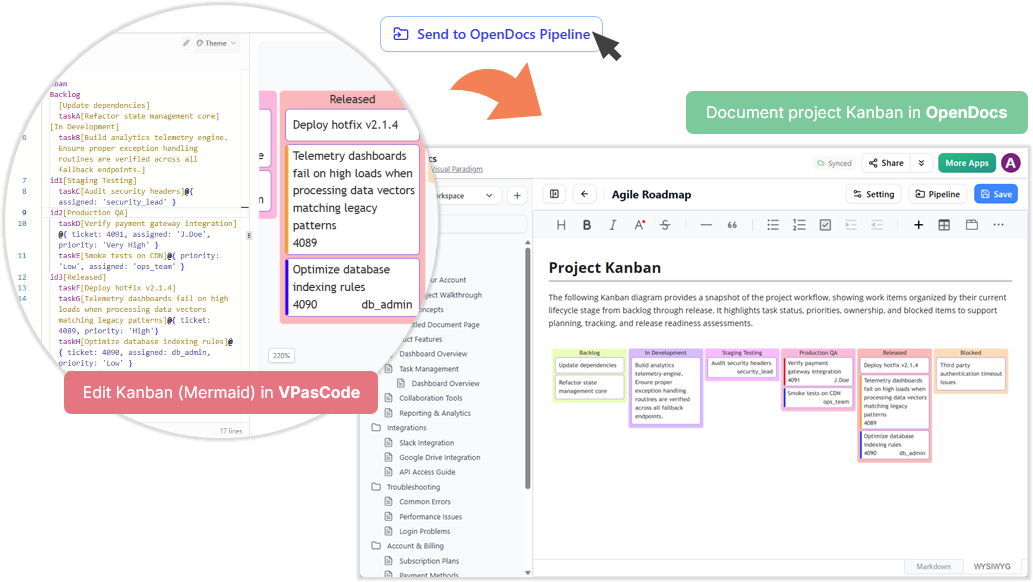
- Agile Sprint Retrospectives & Roadmaps: A project manager outlines a project timeline, a Gantt chart, or a Kanban workflow textually in VPasCode. Instead of saving it locally, they pipeline it over to OpenDocs, dropping it directly into a shared team handbook or sprint documentation page for collaborative viewing.
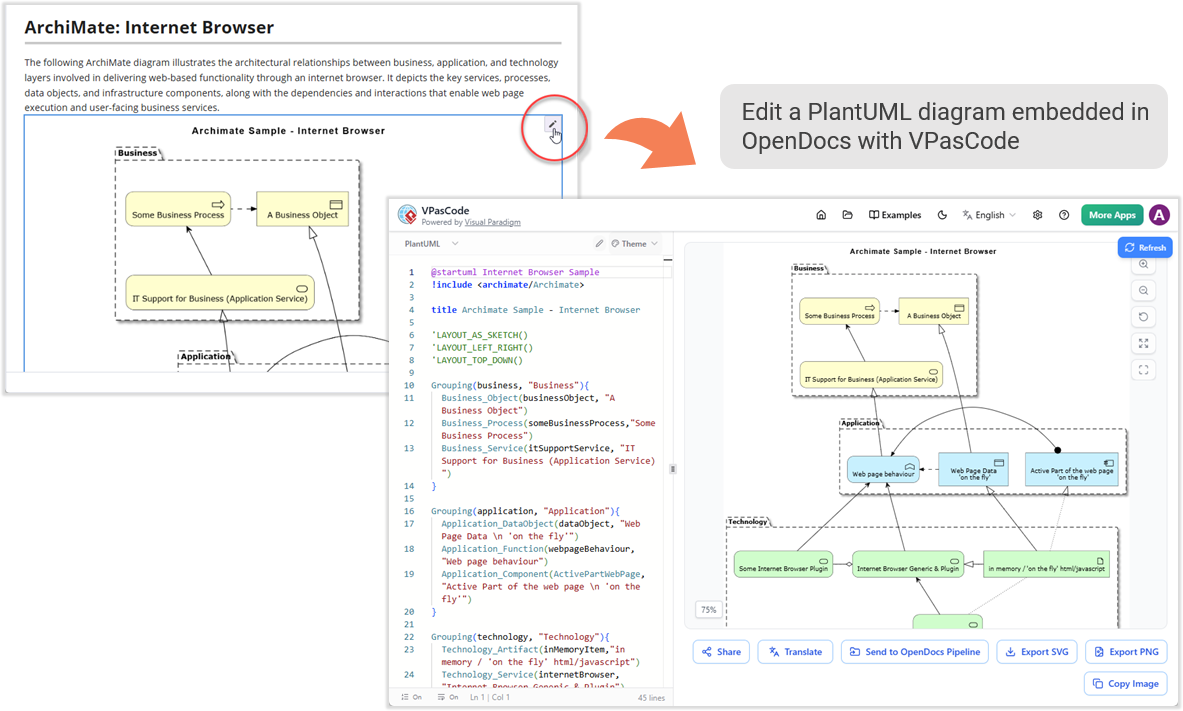
- Rapid Documentation Updates: Imagine a system flow changes. Instead of regenerating the entire asset, a technical writer clicks the edit pencil directly inside OpenDocs, refines the text-to-diagram script in VPasCode, and updates the documentation instantly via the pipeline. It ensures documentation keeps pace with rapid code alterations.
How it Works: A 5-Step Guide to the Pipeline
Moving your diagrams from drafting to documentation takes only a matter of seconds. Here is the step-by-step workflow:
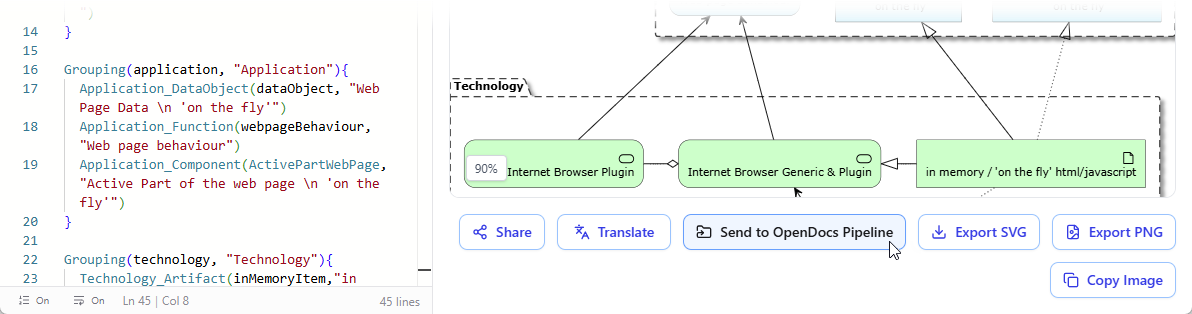
- Initiate the Transfer: Inside the VPasCode interface, look under the diagram viewer on the right-hand side and click the “Send to OpenDocs Pipeline” button.
- Add Context (Optional): A prompt will appear asking for an optional description. You can use this to note down details about the diagram, log a brief changelog, or simply skip it if you are in a rush.
- Confirm and Send: Click Confirm. Your diagram code and preview are instantly packaged and securely routed to your OpenDocs workspace pipeline. You can choose to keep refining your code in VPasCode or head directly over to OpenDocs.
- Access the Pipeline: Navigate over to your OpenDocs Dashboard. Edit any documentation page where you want the visual to live and open up the Pipeline pane. Your newly sent diagram will be waiting for you in the list.
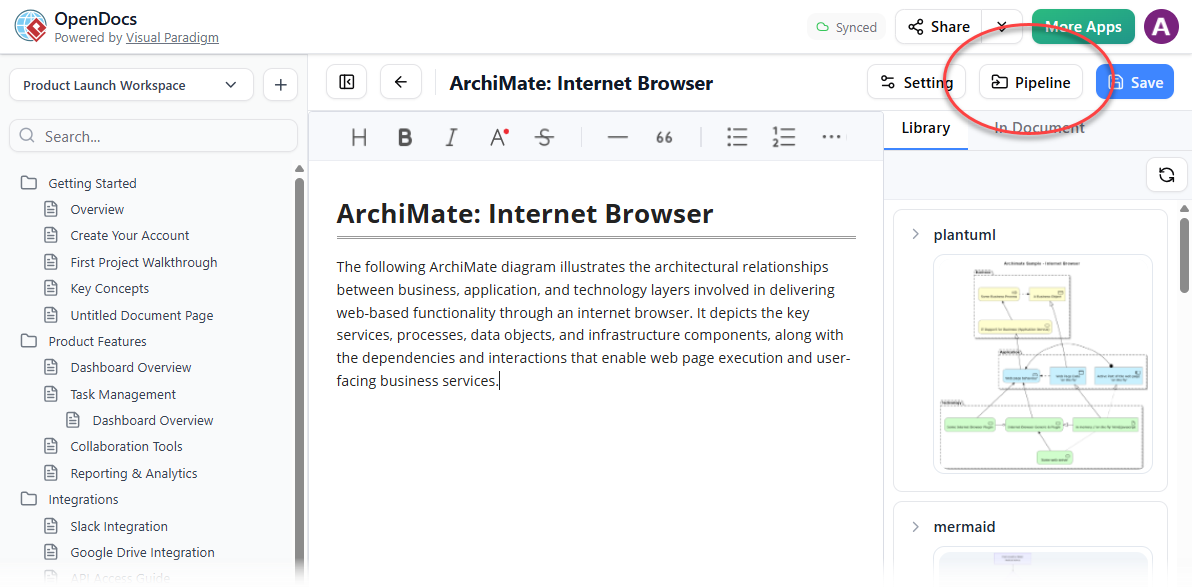
- Insert and Publish: Hover over the thumbnail of your diagram inside the Pipeline pane, click the Insert button, and watch it drop perfectly into your document. From there, you can continue typing out the rest of your knowledge base page.
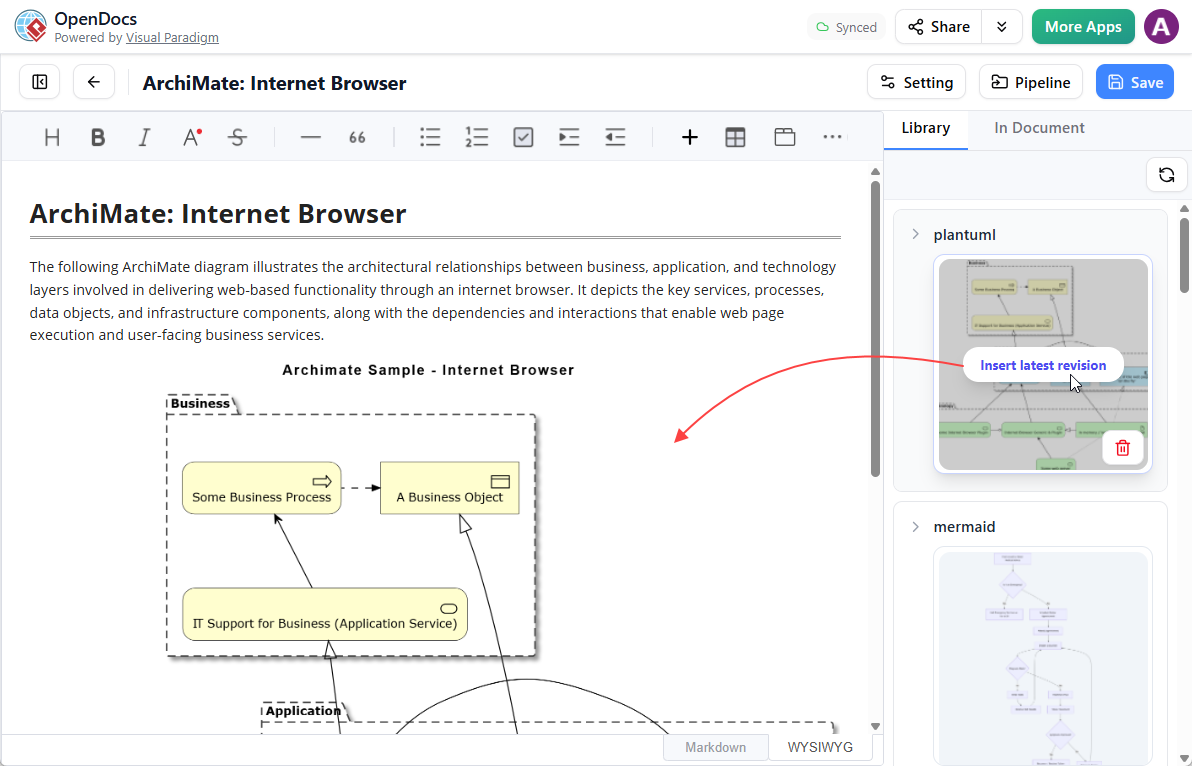
Need to make a quick change?
If you spot an error or need to expand the diagram later, there is no need to rebuild it from scratch. Simply click the tiny Pencil button located at the top right of the inserted image inside OpenDocs. This action securely opens up the code script back inside the VPasCode editor. Modify the text syntax, rerun the pipeline steps above, and replace the old image in your documentation flawlessly.
A Recap of the VPasCode Ecosystem
If you are new to VPasCode, it provides a comprehensive, unified environment for rendering text-to-diagram syntaxes in real-time. Whether you are using a free tier or advanced AI utilities, it supports a vast catalog of visual representations:
- PlantUML: ArchiMate, C4, Sequence, Use Case, Class, Object, Activity, Component, Deployment, State, Timing, ERD, Chen ERD, Network, WBS, and more.
- Mermaid: Flowchart, Class, Sequence, Entity Relationship Diagram, State Diagram, Mind Map, C4, Gantt, Quadrant, Requirement Diagram, Timeline, User Journey, Git Graph, Kanban, etc.
- Graphviz: Digraph, Graph, Flowchart, Organization Chart, Cluster, and Data Flow.
Note: Free features include real-time previewing, URL sharing, and vector/raster exports (SVG/PNG). Paid editions (Visual Paradigm Online Combo Edition or Desktop Professional Edition with active maintenance) unlock advanced core capabilities like AI code error fixing and AI translation.
Part of a Highly Integrated Visual Paradigm Ecosystem
This new pipeline is part of our broader vision to position Visual Paradigm as a highly cohesive, robust ecosystem where design and knowledge retention live hand-in-hand. OpenDocs acts as the central repository for your team’s collective intelligence, and you can pipe content into it from virtually all of your favorite Visual Paradigm platforms:
- Desktop Modeling to Docs: Send your enterprise-grade blueprints from Visual Paradigm Desktop seamlessly to your documentation pipeline (Guide).
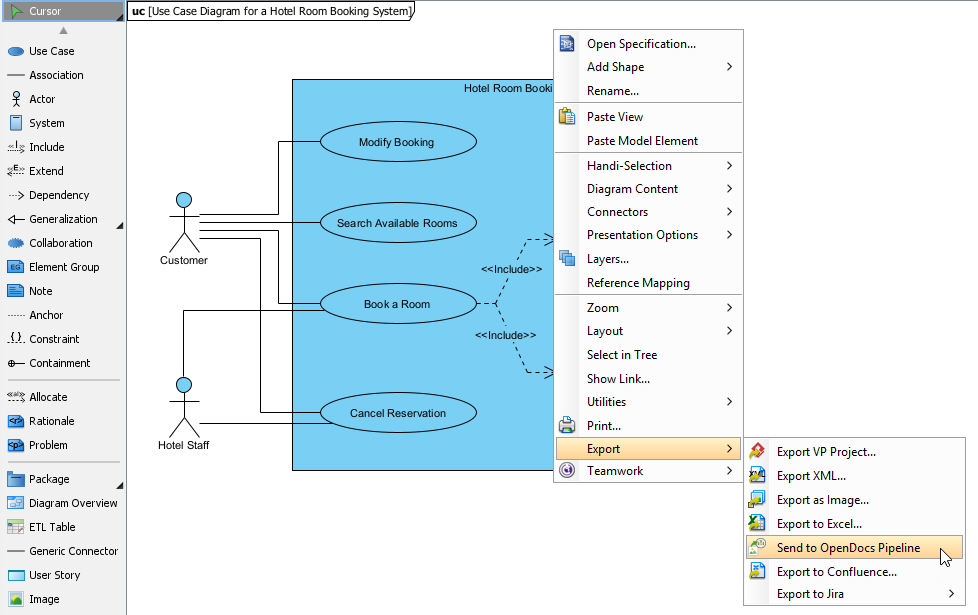
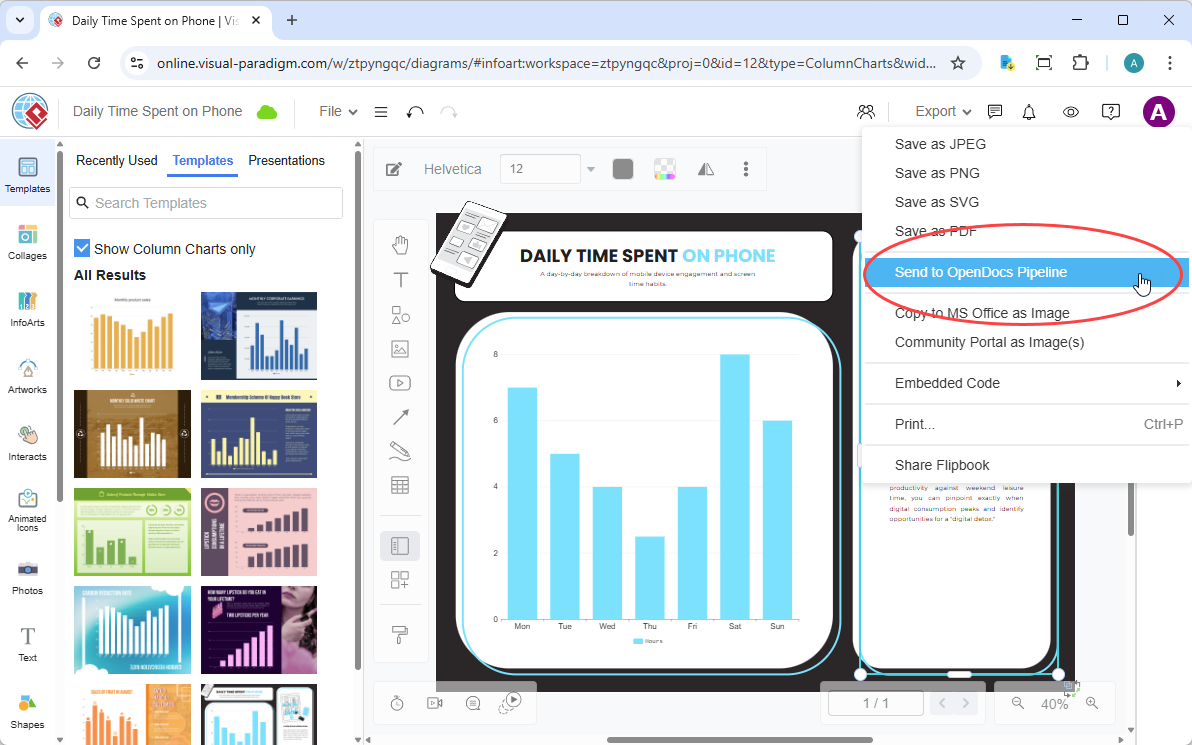
- VP Online to Docs: Export your web-based cloud diagrams or structural graphs natively from Visual Paradigm Online into OpenDocs (Guide).
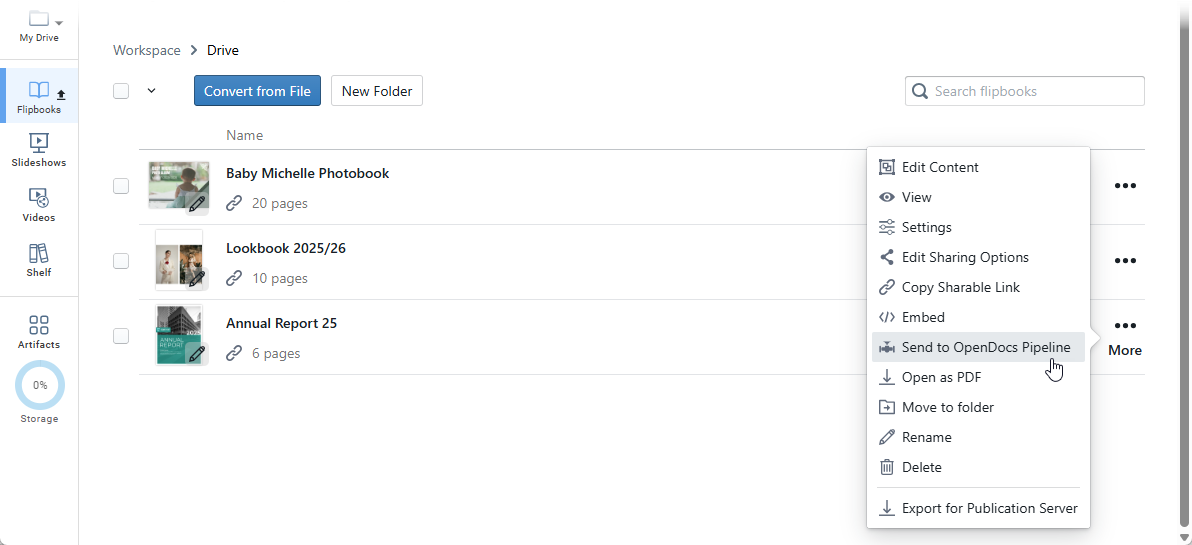
- Digital Bookshelves to Docs: Embed or share interactive flipbooks and organized digital bookshelves from VP Online straight into your knowledge portals (Guide).
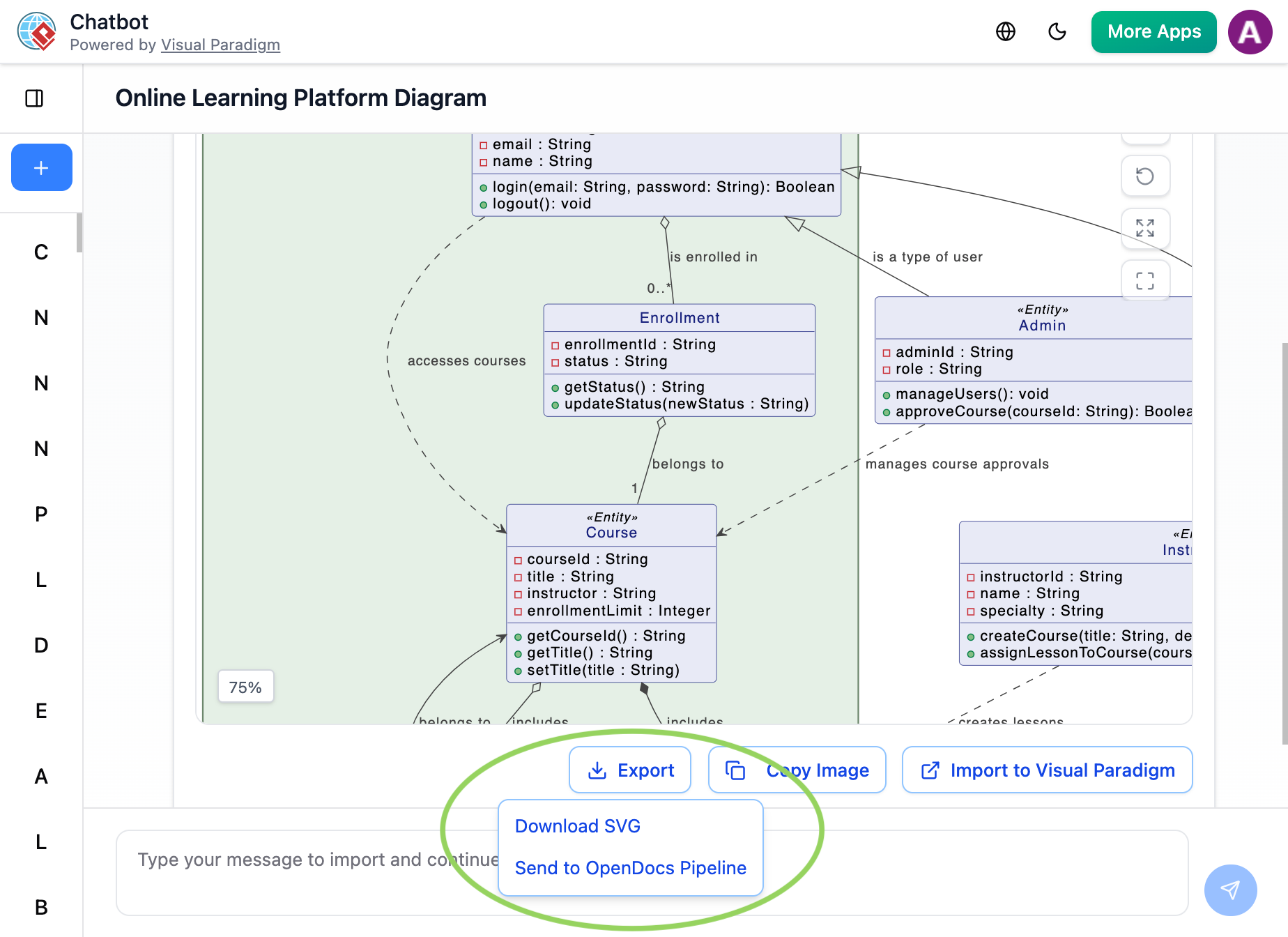
- AI Chatbots to Docs: Prompt our AI system to generate a brand-new visual concept and send it directly into the OpenDocs pipeline for immediate context building (Guide).
Ready to supercharge your technical documentation workflow? Experience the unified power of text-to-diagraming and fluid knowledge management today by visiting VPasCode and setting up your workspace on OpenDocs!
Related posts:
 Seamless Diagram Lifecycle Management: Enhance and Edit AI-Generated Diagrams in Visual Paradigm OpenDocs via VPasCode
 Break Language Barriers Natively with VPasCode’s New AI Diagram Translation
 Never Get Stuck on Syntax Again: Introducing AI Code Error Fixing in VPasCode
 Streamline Root-Cause Analysis and Execution with the New Solution Selection Matrix